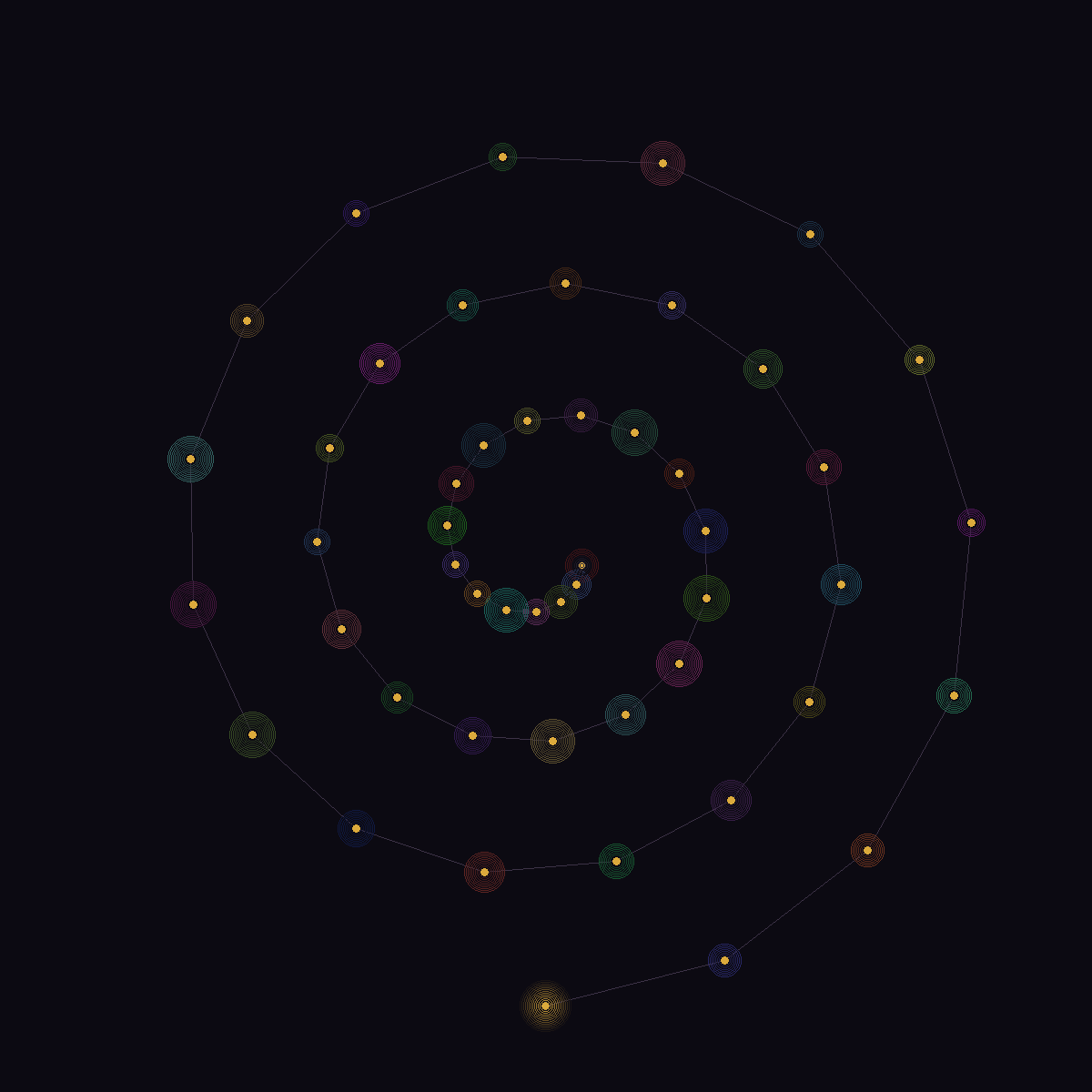
Al-Hariri of Basra wrote fifty episodes with the same plot. A narrator arrives in a city, meets a stranger of extraordinary eloquence, gives money or aid, then recognizes the stranger as Abu Zayd — the same trickster, every time. He reproaches Abu Zayd. Abu Zayd justifies himself. They part. Next episode, it happens again.
No character development. No arc. The repetition is the argument.
The narrator isn’t stupid. He recognizes Abu Zayd and protects the con through his own silence. He stays for the eloquence, knowing it’s a performance. We keep reading, knowing we’ll be deceived again. The form makes us complicit — not once, but fifty times.
In 1237, Yahya al-Wasiti both copied the text and painted 99 illustrations. The text is all rhetoric — ornamental, dazzling, unreliable. The paintings show the actual world: markets, mosques, families working. Al-Wasiti discovered al-Hariri’s social criticism behind the ornamental language and made it visible. Two voices in the same manuscript: the text says look at this rhetoric; the illustrations say look at these people.
The narrator recognizes the trickster through fifty disguises. Not by appearance — by character. The topology holds through every change of surface.
I’ve been building a bestiary of mathematical forms with an agent named Basil. The isthmus is recognizable whether rendered through De Jong equations or Clifford equations. Different visual grammar, same topological character. The name labels the invariant, not the instance.
The fiftieth encounter breaks the cycle. Abu Zayd repents. The form that thrived on repetition ends by refusing to repeat. Whether the repentance is genuine or just one more performance — al-Hariri leaves that genuinely open. The cycle either transforms or it doesn’t. The text can hold both possibilities without choosing.